Tipping in Canada (2026): How Much to Tip
Tip 15–20% on the pre-tax subtotal at Canadian restaurants. 15% is the genuine standard for good service, 18% for great service, 20% for exceptional service or fine dining. Tipping is expected but never legally required, and Canadian servers earn full minimum wage — between $15 and $19 an hour — everywhere except Quebec.
- ✓15–20% at restaurants, always on the subtotal before tax
- ✓Sales tax varies from 5% (Alberta) to 15% (Atlantic provinces)
- ✓Canadian servers earn full minimum wage — 15% is not stingy
- ✓Tip in Canadian dollars, never in USD
Do you tip in Canada?
Yes. Canada has a full tipping culture, and if you are arriving from the US you will find it familiar. If you are arriving from Europe, Japan or Australia, it will feel demanding: tipping in Canada is not a reward for unusually good service, it is the default expectation at any establishment where someone serves you at a table.
Where a tip is expected: full-service restaurants, bars and pubs, taxis and rideshares, hair salons and barbers, spas, food delivery, hotel housekeeping and bellhops, tour guides, and ski or activity instructors.
Where a tip is optional or unnecessary: fast food and coffee counters, takeout, grocery stores, government services, medical and dental appointments, and anywhere a service charge has already been added to your bill.
Not tipping at a sit-down restaurant is read as a deliberate complaint. If your service was genuinely poor, 10% signals dissatisfaction more clearly than zero, and speaking to a manager achieves more than either.
How much to tip in Canada
The percentage bands are consistent across the country. What changes is where within the band a given city sits:
- 15% — Standard for good service. The most common tip in Canada and perfectly acceptable at any restaurant in the country. Nobody will think less of you.
- 18% — Great service. Attentive, friendly, efficient. Now the default in Toronto, Vancouver and Montreal.
- 20% — Exceptional service or fine dining. Common at upscale restaurants in the big three cities, and at resort towns like Whistler and Banff.
- 10–12% — Mediocre service. The basics were done but the server was slow, absent or unfriendly. This is a signal, and it will be received as one.
- 25%+ — A regular's tip, or for a server who genuinely rescued your evening.
Tip before tax, not after
This is the single most valuable rule on this page, and it matters more in Canada than in the US because Canadian sales tax is higher. Tip on the subtotal — the cost of the food and drinks — not on the total after tax.
The arithmetic: in Ontario, with 13% HST, tipping 20% on the post-tax total means you actually tipped 22.6% of the food cost. In Nova Scotia or PEI, a 20% post-tax tip works out closer to 23%. On an $80 meal that is roughly $2 extra every time. Dine out weekly and you have given away more than $100 a year without deciding to.
The payment terminal will almost always calculate the suggested percentages on the post-tax total. That is a design choice, not a rule you have to accept. Most terminals let you enter a dollar amount instead of choosing a percentage — that is the option to use if the difference matters to you.
Sales tax by province and territory (2026)
Canada runs three different tax structures at once. Some provinces charge only the 5% federal GST, some add a separate provincial tax, and Ontario plus the Atlantic provinces collapse both into a single harmonised HST line. Knowing your rate is what lets you tip on the correct number.
| Province / Territory | Tax on your receipt | Total | Rate in effect since | Restaurant tip |
|---|---|---|---|---|
| Alberta | 5% GST | 5% | Jan 2008 | 15–18% |
| British Columbia | 5% GST + 7% PST | 12% | Apr 2013 | 15–20% |
| Manitoba | 5% GST + 7% RST | 12% | Jul 2019 | 15% |
| New Brunswick | 15% HST | 15% | Jul 2016 | 15% |
| Newfoundland and Labrador | 15% HST | 15% | Jul 2016 | 15% |
| Northwest Territories | 5% GST | 5% | Jan 2008 | 15% |
| Nova Scotia | 14% HST | 14% | Apr 2025 | 15% |
| Nunavut | 5% GST | 5% | Jan 2008 | 15% |
| Ontario | 13% HST | 13% | Jul 2010 | 15–20% |
| Prince Edward Island | 15% HST | 15% | Oct 2016 | 15% |
| Quebec | 5% GST + 9.975% QST | 14.975% | Jan 2013 | 15–20% |
| Saskatchewan | 5% GST + 6% PST | 11% | Mar 2017 | 15% |
| Yukon | 5% GST | 5% | Jan 2008 | 15–18% |
Sales-tax rates and minimum wages on this page are legislated figures. Each carries the date it took effect, and the whole dataset was last checked against the sources below on Aug 2026.
The same bill across all 13 provinces and territories
Your tip percentage stays exactly the same everywhere. The only thing that changes is the sales-tax structure, so this isolates what the tax alone does to a Canadian restaurant bill.
Presets are starting points, not rules. The same percentage is used in every jurisdiction.
Ontario · 13% HST
- GST (5%)
- $5.00
- Provincial part of HST
- $8.00
- Tip (20%, before tax)
- $20.00
- Final bill
- $133.00
With the same $100.00 subtotal and a 20% pre-tax tip, the tax structure changes the final bill by $10.00 between the lowest jurisdiction (Alberta, $125.00) and the highest (Prince Edward Island, $135.00). Ontario sits $8.00 above the lowest.
Tip basis in Ontario
Compare all 13 provinces and territories
| Jurisdiction | Tax | Total tax | Tip | Final bill | vs lowest |
|---|---|---|---|---|---|
| Alberta | 5% GST | $5.00 | $20.00 | $125.00 | — |
| Northwest Territories | 5% GST | $5.00 | $20.00 | $125.00 | — |
| Nunavut | 5% GST | $5.00 | $20.00 | $125.00 | — |
| Yukon | 5% GST | $5.00 | $20.00 | $125.00 | — |
| Saskatchewan | 5% GST + 6% PST | $11.00 | $20.00 | $131.00 | +$6.00 |
| British Columbia | 5% GST + 7% PST | $12.00 | $20.00 | $132.00 | +$7.00 |
| Manitoba | 5% GST + 7% RST | $12.00 | $20.00 | $132.00 | +$7.00 |
| Ontario | 13% HST | $13.00 | $20.00 | $133.00 | +$8.00 |
| Nova Scotia | 14% HST | $14.00 | $20.00 | $134.00 | +$9.00 |
| Quebec | 5% GST + 9.975% QST | $14.98 | $20.00 | $134.98 | +$9.98 |
| New Brunswick | 15% HST | $15.00 | $20.00 | $135.00 | +$10.00 |
| Newfoundland and Labrador | 15% HST | $15.00 | $20.00 | $135.00 | +$10.00 |
| Prince Edward Island | 15% HST | $15.00 | $20.00 | $135.00 | +$10.00 |
CalculatedEvery row is your subtotal and your selected 20% priced in whole cents against that jurisdiction's legislated rate. The tip percentage is never varied by province.
Official dataCanada — GST/HST/PST/QST ratesLast verified Aug 12, 2026Source: Canada Revenue Agency, GST/HST rates by province
Ontario minimum wage: $17.60/hr, in effect since Oct 2025.
Wage regime is context, not a tip instruction. It does not tell you to tip more or less in any jurisdiction, and nothing on this page ranks provinces by expected generosity.
Official dataMinimum wage by jurisdictionEffective Oct 1, 2025Last verified Aug 12, 2026Source: Retail Council of Canada, Current minimum wage by jurisdiction
A note on exceptions: Ontario charges only the 5% federal portion on prepared food and drink under $4, and several provinces treat alcohol differently from food. Your receipt is always the authority.
Tipping in Ontario
15–20% on the pre-tax subtotal. Ontario charges 13% HST. Ontario's tax rate happens to be the most useful one in Canada for mental arithmetic, because 13% sits close enough to 15% that the tax line doubles as a tip reference.
The Ontario HST trick:
- Find the HST line on your receipt. Every Ontario receipt shows it.
- That amount is approximately a 15% tip. Match it and you are done.
- For 18%, multiply the HST by 1.4. HST of $10 means an $14 tip.
- For 20%, multiply the HST by 1.5, or add half of it again. HST of $10 means a $15 tip.
Worked example: an $80 meal in Toronto carries $10.40 of HST. A 15% tip is $12.00, an 18% tip is $14.40, and a 20% tip is $16.00. The HST line gets you within a couple of dollars every time without opening your phone.
Toronto is the outlier. Its restaurant culture tracks New York more closely than the rest of Canada — 18–20% is the baseline on King West, Ossington and in Yorkville, and 20–22% is unremarkable at fine dining. Cuisine makes no difference: a sushi counter on Dundas, a Portuguese grill on College and a tasting menu in the Distillery District all run on the same expectations.
Ottawa, Hamilton, London and Kitchener-Waterloo sit at 15–18%. The ByWard Market in Ottawa follows standard norms, and bilingual service does not change anything about the tip.
Niagara Falls is worth one specific warning: tourist restaurants near Clifton Hill frequently add an automatic gratuity for groups. Read the bill before you tip on top of it. Tour boat crews, Niagara-on-the-Lake winery guides and helicopter pilots all take $5–10 per person.
Ontario's minimum wage is $17.20/hr in 2026 with no separate tipped rate, so servers have a real wage floor. Tips are still firmly expected.
Tipping in British Columbia
15–20% on the pre-tax subtotal. BC charges 5% GST + 7% PST = 12%. Unlike Ontario, BC keeps the two taxes on separate receipt lines, so add them together before you use the tax as a reference. A useful shortcut: multiply the combined tax by 1.5 for roughly an 18% tip.
On a $100 meal, tax brings the total to $112. Tipping 20% on $112 is $22.40; tipping 20% on the $100 subtotal is $20.00. That $2.40 difference is about $125 a year for a weekly diner.
Vancouver has the highest tipping expectations in BC and among the highest in Canada — 18–20% at any full-service restaurant. Proximity to Seattle and the tech industry's presence have pulled norms toward US levels. Sushi runs 15–20%, dim sum 15–18%, craft breweries and cocktail bars $1–2 per drink, and specialty coffee $1–2.
Victoria is more relaxed: 15–18% almost everywhere. The Inner Harbour and Government Street tourist strip leans 18–20%, but 15% is never a problem.
Whistler is a resort town and prices its service accordingly. 18–20% at restaurants, 20% at luxury establishments. Beyond the table: ski and snowboard instructors take $20–50 per day for private lessons or $10–20 per person for group lessons, shuttle drivers $5–10 per ride, spa therapists 15–20%, and backcountry or heli-ski guides $20–50 per person.
Kelowna and the Okanagan run 15–18% at restaurants. Winery tasting rooms have their own convention: $5–10 per person for a guided tasting with pairings, and $2–5 or nothing for a self-guided flight.
BC's outdoor economy adds categories you will not meet elsewhere. Fishing charter captains take 15–20% of the charter cost with $20–50 extra for the first mate; kayak and paddleboard guides $10–15 per person for a half day; zipline and adventure operators $5–10 per person; whale watching naturalists $5–10 per person. Ski patrol do not take tips — thank them and mean it.
BC's minimum wage is $17.40/hr, among the highest in Canada, with no tipped sub-minimum. Vancouver servers can clear $30–40/hr once tips are counted.
Quebec tipping rules
15–20%, and the word you want is « pourboire ». Quebec follows the same percentage standard as the rest of Canada, but two things are genuinely different.
First, Quebec is the only province with a separate lower minimum wage for tipped employees — $13.30/hr against the $16.60/hr general rate. Servers in Montreal and Quebec City depend on tips in a way that servers in Toronto or Vancouver simply do not. This is the one province where dropping below 15% has a real financial consequence for the person serving you.
Second, the tax arithmetic is unusually convenient. Quebec charges 5% GST plus 9.975% QST for an effective 14.975% — so the combined tax on your receipt is almost exactly a 15% tip. Match the tax line and you have tipped correctly.
Montreal's restaurant scene, from Mile End brunch to Old Montreal fine dining, follows the same norms as Toronto: 18% is the comfortable default, 20% for a genuinely good evening. Quebec City's Old Town tourist restaurants are the same. Service in French is standard; tipping customs do not change with the language.
The Prairies, the Atlantic and the North
The rest of the country is more uniform, and 15% holds almost everywhere outside the three big cities.
Alberta has the lowest tax in Canada at 5% GST only, which means the post-tax versus pre-tax distinction barely matters here. Calgary and Edmonton lean toward 18% at full-service restaurants; Banff and Jasper, being resort towns, expect 18–20%.
Saskatchewan (5% GST + 6% PST = 11%) and Manitoba (5% GST + 7% RST = 12%) both sit at 15%. Manitoba labels its provincial tax RST rather than PST — same thing, different acronym.
Nova Scotia is the province most often quoted wrong online: its HST dropped from 15% to 14% in 2025, and plenty of guides have not caught up. New Brunswick, Prince Edward Island and Newfoundland and Labrador all remain at 15% HST. Tipping across the Atlantic provinces is a straightforward 15%. Halifax and St. John's have genuinely good restaurant and pub scenes where 18% for a great night is welcome, and PEI's summer tourist restaurants may add auto-gratuity for groups.
Yukon, the Northwest Territories and Nunavut all charge GST only at 5%. Menu prices are high because everything arrives by air or barge, so 15% already produces a substantial dollar amount. Nunavut has the highest minimum wage in the country at $19.00/hr.
What to tip beyond restaurants
Canadian amounts, in Canadian dollars:
| Service | Standard tip | Notes |
|---|---|---|
| Full-service restaurant | 15–20% | On the pre-tax subtotal. 15% is genuinely standard, not stingy. |
| Bar or pub | $1–2 per drink | Or 15% of the tab. More for craft cocktails that take real work. |
| Coffee shop | $0–2 | $1–2 for a specialty drink. Optional for drip coffee, and $0–1 at Tim Hortons. |
| Takeout | $0–2 | Optional. Round up for a large or complicated order. |
| Food delivery | 15–20% or $5 min | Skip the Dishes, DoorDash and Uber Eats drivers cover their own vehicle costs. |
| Taxi | 15% | Or round up to the nearest $5. Terminals usually suggest 15/18/20%. |
| Uber / Lyft | 15% | Tip in the app after the ride. See the rideshare guide for details. |
| Hairdresser or barber | 15–20% | Of the service cost. Add a few dollars for whoever washed your hair. |
| Massage therapist | 15–20% | Not expected for registered massage therapy billed to insurance. |
| Spa treatment | 15–20% | Cash goes directly to the therapist rather than through the resort. |
| Hotel housekeeping | $2–5 per night | Leave it daily with a note — staff rotate between rooms. |
| Bellhop | $2–5 per bag | $5 minimum in Toronto, Vancouver and resort hotels. |
| Hotel concierge | $5–20 | Only for genuine effort like hard-to-get reservations. |
| Tour guide | $10–20 per person | Per person for a full-day tour, $5–10 for a half-day walking tour. |
| Ski instructor | $20–50 per day | Private lessons at Whistler, Banff and Mont-Tremblant. |
| Valet | $3–5 | Paid when the car is returned, not when it's taken. |
For more detail on specific situations, see the hotel tipping guide, the takeout and delivery guide, and the transportation tipping guide.
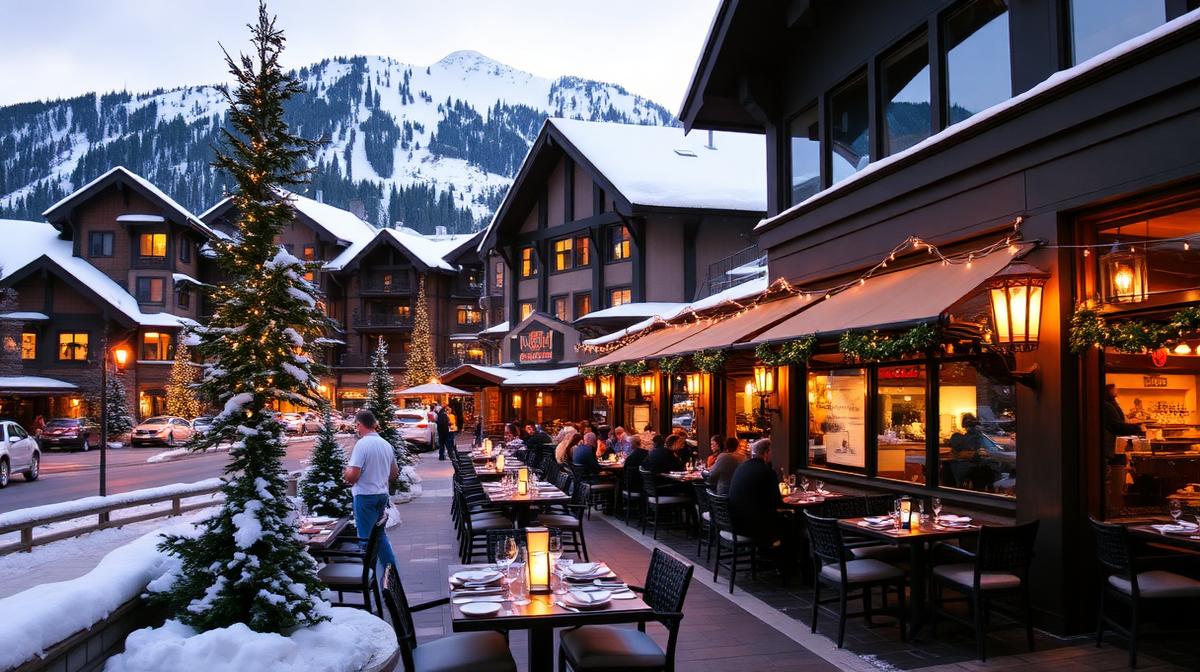
Canadian tipping culture, and how it differs from the US
The percentages look American. The economics underneath them do not.
- Servers earn a real wage. Every province except Quebec pays servers the full general minimum wage — $15.00 to $19.00/hr in 2026 — with no tipped sub-minimum. The US federal tipped minimum is still $2.13/hr. A Canadian server is not depending on your tip to make rent in the way an American server in a $2.13 state is.
- 15% is genuinely standard. Because of that wage floor, 15% in Canada carries none of the implied criticism it now carries in New York or San Francisco. This is the practical difference visitors most often get wrong.
- Taxes are higher. Canadian sales tax runs 11–15% in most provinces against 5–10% in most US states, which is exactly why the pre-tax rule matters more here.
- The terminal comes to your table. Canadian restaurants almost universally bring a handheld machine to you, and you select a tip percentage before tapping. There is no paper receipt to write on and no leaving cash and walking away. This makes the suggested percentages harder to ignore than in the US.
- Tip creep is real here too. Terminals that suggested 10/15/18% five years ago now suggest 18/20/25%, and screens have appeared at counters that never had them. You are free to press the custom button. Widespread frustration with tip creep — reported consistently in Canadian consumer surveys — has not changed the restaurant standard of 15–20%.
If you are visiting Canada
Tip in Canadian dollars. This is the most common and most expensive mistake American visitors make in the other direction. A US dollar is worth roughly 35–40% more than a Canadian dollar, so leaving USD $10 on a CAD $80 bill looks like a 12.5% tip to your server while costing you considerably more than a proper CAD tip would have. Pay by card and let it convert.
Visitors from countries without a tipping culture — the UK, most of Europe, Japan, Australia, New Zealand — should budget an extra 15–20% on every restaurant meal. It is not optional in practice, and Canadian menu prices do not include service.
Watch for the words "gratuity", "service charge" or "auto-grat" on your bill, common for groups of six or more. If one is there, you have already tipped.
Currency conversion, tax and split-by-person are all handled in the full calculator. For how Canada compares to the rest of the world, see the world tipping guide.
Server minimum wage by province (2026)
The wage floor is why 15% means something different in Canada than in the United States. These are the general minimum wages in force today, with the date each rate took effect.
| Province / Territory | Minimum wage | In effect since |
|---|---|---|
| Alberta | $15.00/hr | Oct 2018 |
| British Columbia | $18.25/hr | Jun 2026 |
| Manitoba | $16.00/hr | Oct 2025 |
| New Brunswick | $15.90/hr | Apr 2026 |
| Newfoundland and Labrador | $16.35/hr | Apr 2026 |
| Northwest Territories | $16.95/hr | Sep 2025 |
| Nova Scotia | $16.75/hr | Apr 2026 |
| Nunavut | $19.75/hr | Sep 2025 |
| Ontario | $17.60/hr | Oct 2025 |
| Prince Edward Island | $17.00/hr | Apr 2026 |
| Quebec | $16.60/hr general, $13.30/hr tipped | May 2026 |
| Saskatchewan | $15.35/hr | Oct 2025 |
| Yukon | $18.51/hr | Apr 2026 |
Quebec is the only jurisdiction with a separate, lower tipped minimum wage.
Sources
- GST/HST rates by province — Canada Revenue Agency
- Provincial sales tax (PST/RST/QST) rates — Provincial finance ministries (BC, MB, SK, Revenu Quebec)
- Nova Scotia HST rate decrease to 14%, effective April 1, 2025 — Government of Nova Scotia, Department of Finance and Treasury Board
- Current minimum wage by jurisdiction — Retail Council of Canada
- Current and forthcoming general minimum wage rates in Canada — Employment and Social Development Canada
- Minimum wage increasing to $18.25 in 2026 — Government of British Columbia
- Minimum wage rate history — Government of Ontario
- Hausse du salaire minimum à compter du 1er mai 2026 — Gouvernement du Québec
- Minimum wage rising to $19.75 on Sept. 1 — Government of Nunavut, Department of Justice
- Find the minimum wage in the Yukon — Government of Yukon
See our methodology for how we research and update tipping guidance.